
It is the ultimate biological betrayal. You have been yawning since 4 PM. Your eyes burn, your body aches, and you can barely form a coherent sentence. You drag yourself to bed, collapse onto the mattress, turn off the light, and... suddenly your eyes snap wide open. Your heart beats a little faster. You are completely exhausted, but you cannot sleep.
This agonizing state is known as 'wired and tired.' It is one of the most common complaints in modern sleep medicine, and it is entirely the result of a mismatch between two separate biological systems: your sleep drive and your nervous system arousal.
The Two Systems of Sleep
To understand why this happens, you need to understand the two main forces that control sleep:
- **Homeostatic Sleep Drive (The Engine):** From the moment you wake up, a chemical called adenosine builds up in your brain. The longer you are awake, the more adenosine accumulates, creating 'sleep pressure.' This is why you feel physically exhausted.
- **The Autonomic Nervous System (The Brakes):** This is your fight-or-flight system. If your brain perceives a threat (which in the modern world means stress, an upcoming deadline, or simply anxiety about not sleeping), it releases cortisol and adrenaline.
When you are 'tired but can't sleep,' you have a massive amount of sleep pressure (the engine is revving hard), but your nervous system is slamming on the brakes. Adrenaline overrides adenosine every single time, because evolutionarily, it doesn't matter how tired you are if a tiger is chasing you.
The Culprit: Hyperarousal
Catch The Thought
"I just need to try harder to sleep."
Trying to sleep is like trying to be spontaneous. The effort itself makes it impossible. Sleep requires the complete relinquishing of control. Trying hard creates performance anxiety, which spikes adrenaline.
The reason you suddenly wake up when your head hits the pillow is often conditioned hyperarousal. If you have spent many nights tossing and turning in bed, your brain starts to associate the physical environment of your bed with stress and wakefulness, rather than rest. The bed itself becomes the trigger for the adrenaline release.
How to Fix the 'Wired' State
Sleep-friction audit
Remove the simplest sleep friction before buying a complicated solution.
-
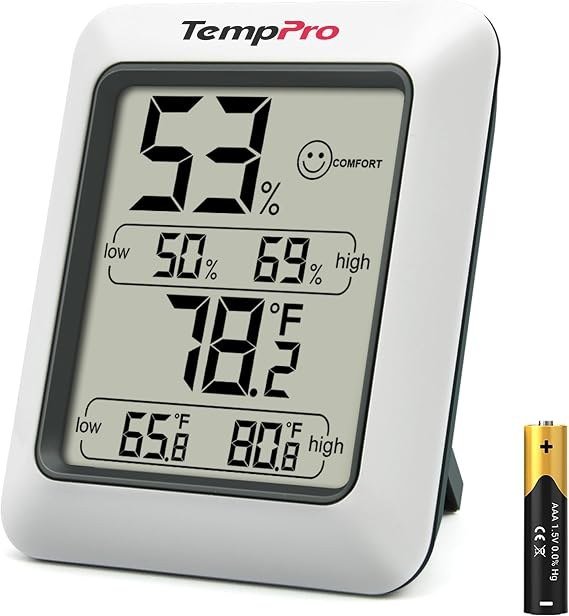
ThermoPro TP50 Temperature and Humidity Monitor
Best for
Finding out what your bedroom actually does overnight before spending on any fix.
Check price on Amazon View details for ThermoPro TP50 Temperature and Humidity Monitor -
Manta PRO Sleep Mask
Best for
Shift workers, side sleepers, and anyone who has tried flat masks and still gets light leaking in around the nose.
What it does well
- Eye cups reposition along the strap to match your own face
- Domed cups keep pressure off the eyelids and allow blinking
Trade-offs
- Noticeably bulkier than a flat silk or fabric mask
- Sits at the premium end of the sleep-mask market
-
Yogasleep Dohm Classic White-Noise Machine — White
Best for
Anyone who wants real fan-driven sound rather than a looping recording, and who values a device with no settings to manage.
What it does well
- Mechanical airflow means there is no loop or seam to notice
- Tone collar adjusts the character of the sound, not just volume
Trade-offs
- One sound only — no rain, ocean or brown-noise options
- Mains powered and not pocket sized, so it is a poor travel choice
-
Levoit Classic 300S Smart Humidifier
Best for
Dry winter bedrooms where you wake with a dry throat or nose.
What it does well
- Addresses dryness that heating causes
- Scheduling and control without getting up
Trade-offs
- Needs regular refilling and genuine cleaning
- Overshooting humidity creates its own problems
Check price on Amazon View details for Levoit Classic 300S Smart Humidifier
After explaining the difference between tiredness and sleep readiness; show the products as a simple environment checklist.
1. Get Out of Bed
If you have been lying awake for roughly 20 minutes (do not check the clock, just estimate), you must break the association. Get out of bed. Go to a different, dimly lit room. Do something incredibly boring—read a manual, fold laundry, or stretch. Do not look at a screen. Only return to bed when your eyelids are physically heavy.
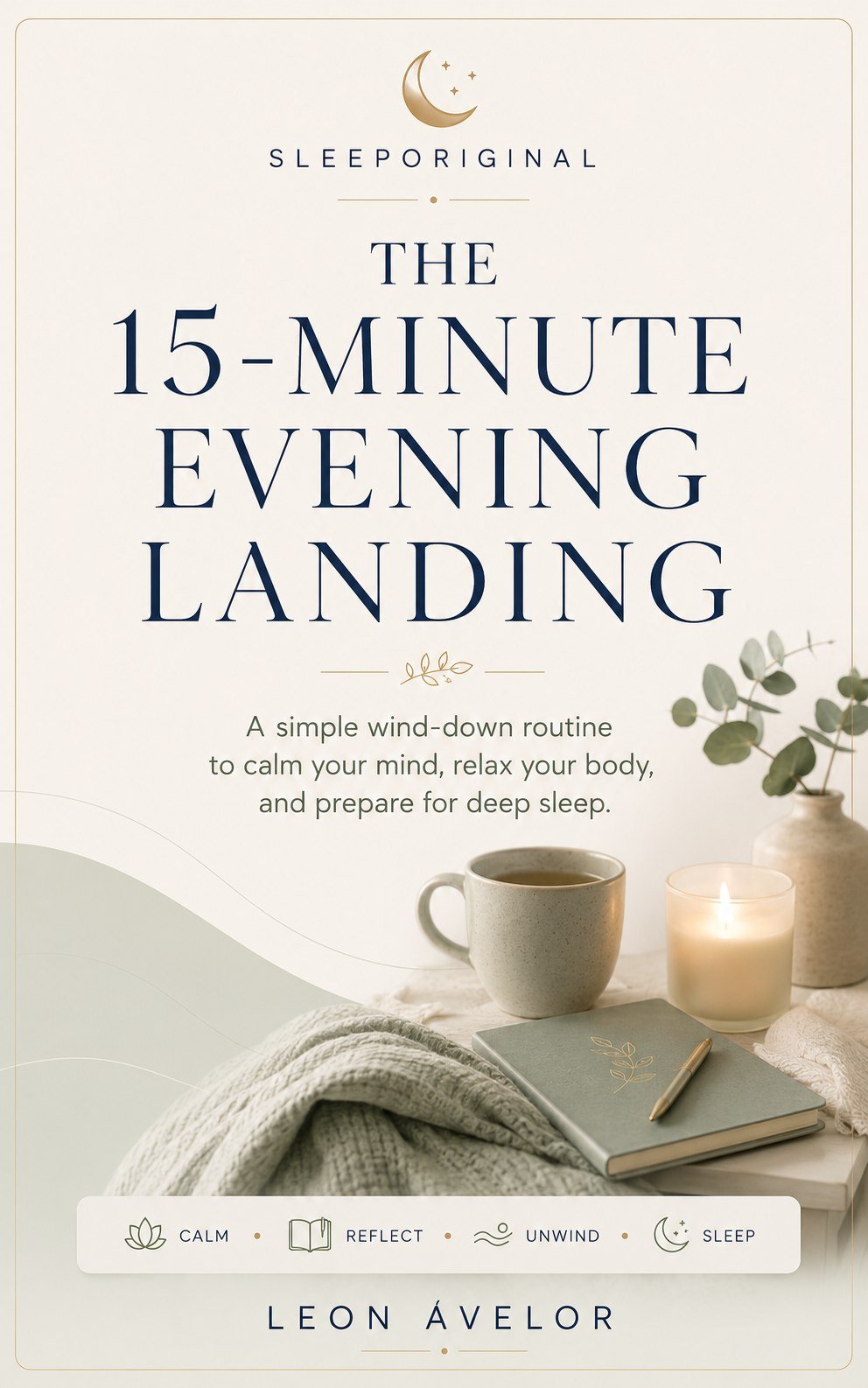
The 15-Minute Evening Landing
A fifteen-minute wind-down sequence in three five-minute parts: close the day, lower stimulation, prepare for rest. Includes a shorter version for evenings that end too late.
Check Price on Amazon2. Brain Dumping
If your mind is racing with tasks for tomorrow, your brain will not let you sleep because it is afraid you will forget them. Externalize the data. Keep a notepad by your bed and write down everything you need to do. Once it is on paper, give yourself permission to let it go until the morning.
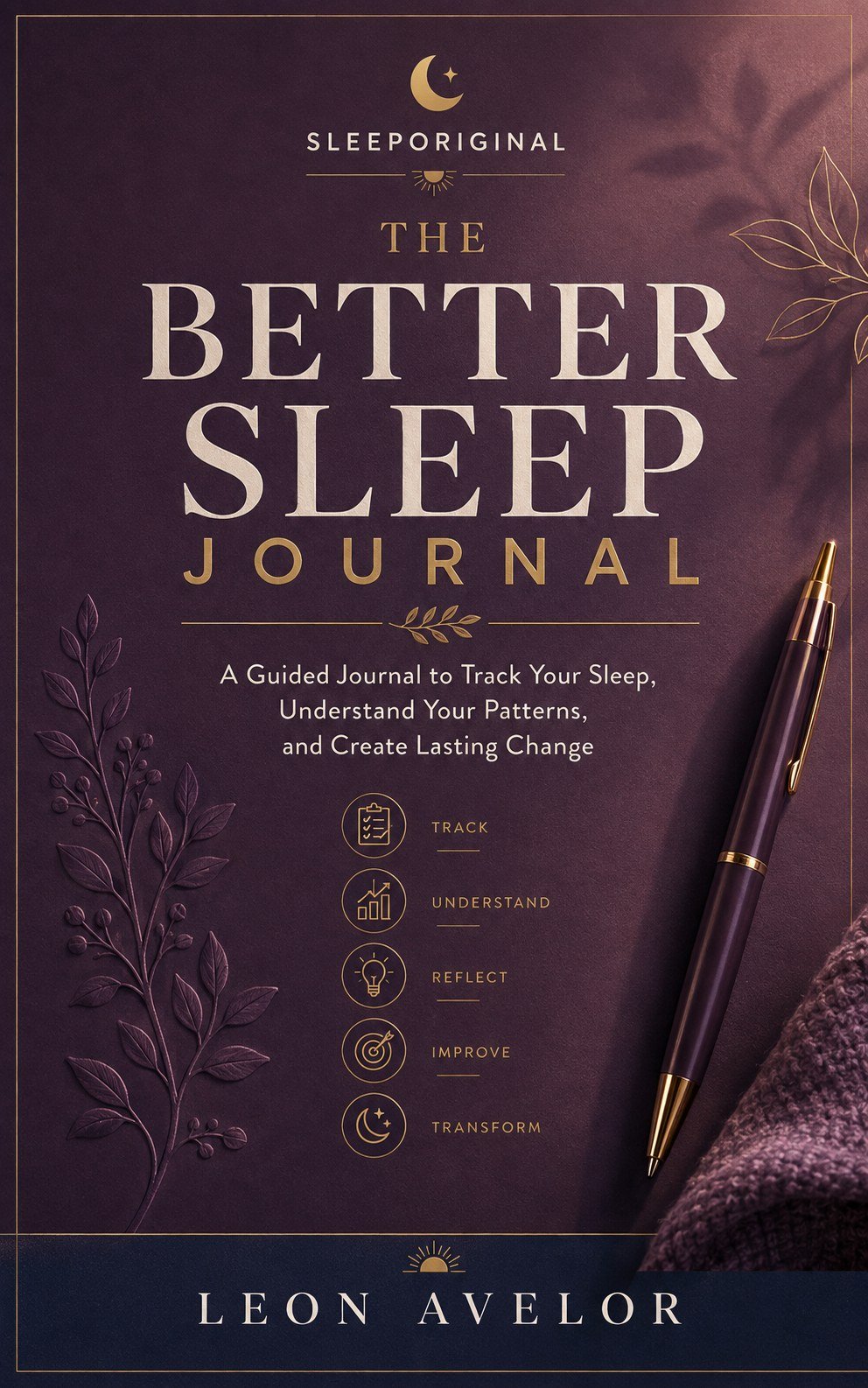
The Sleep Pattern Journal
A guided 30-day journal for noticing your own sleep patterns: what helps, what gets in the way, and what is worth trying next. Observation rather than another programme to follow.
Check Price on AmazonTiny Sleep Experiment
The Physiological Sigh
- To instantly lower autonomic arousal in bed, try the physiological sigh (discovered by Dr. Jack Feldman).
- Take a deep inhale through your nose.
- Before exhaling, take a second, sharp, short inhale to fully expand the lungs.
- Exhale slowly and fully through your mouth.
- Repeat 3-5 times. This rapidly offloads CO2 and acts as a neurological kill-switch for anxiety.
3. Watch Your Afternoon Caffeine
Even if you feel exhausted, if you drank coffee at 4 PM, there is still a significant amount of caffeine blocking your adenosine receptors at midnight. You are feeling the physical exhaustion of your body, but your brain is chemically blocked from receiving the sleep signal. Implement a strict noon caffeine cutoff.
The Long-Term Fix: Protect the Transition
You cannot sprint through your day at 100 mph, slam the brakes at 10 PM, and expect your brain to quietly comply. You must build a transition zone. Give yourself at least 45 minutes before bed where screens are put away, lights are dimmed, and you engage in low-stakes, relaxing activities.
Being tired is only half the equation. You must also be calm. Once you learn to signal safety to your nervous system, the exhaustion will naturally transition into deep, restorative sleep.
Frequently asked questions
Why can't I sleep when I am exhausted?
Because tiredness and sleep readiness are produced by different systems. Adenosine builds sleep pressure across the day, but if your nervous system is in fight-or-flight, cortisol and adrenaline hold the brakes on regardless of how much pressure has built up.
What does "wired and tired" mean?
It is the state where sleep pressure is high and autonomic arousal is high at the same time. The body is exhausted and the nervous system is alert, and the second one wins.
Should I get out of bed if I cannot sleep?
Yes, after roughly 20 minutes. Lying awake in bed builds an association between the bed and frustration, and that association is what turns one bad night into a pattern.
How long should I lie there before giving up?
About 20 minutes, estimated rather than timed. Watching the clock adds arithmetic about how little sleep is left, which raises arousal further.
Does afternoon caffeine matter if I already feel exhausted?
Yes. Caffeine drunk at 4pm is still occupying adenosine receptors at midnight. Your body feels the exhaustion; your brain is chemically blocked from receiving the signal.
Join the conversation
Questions and experiences are welcome. Every comment is read by a person before it appears, and your email address is never published.
No comments yet — yours would be the first.