
We have all experienced the misery of jet lag: lying awake at 3 AM staring at the ceiling, then feeling like a zombie at 2 PM. But you don't have to cross an ocean to experience jet lag. Millions of people suffer from 'Social Jet Lag' every single week, dragging their bodies through a mismatched biological clock because of modern lifestyles. The key to waking up energized isn't just about how *much* you sleep, but *when* you sleep.
What is the Circadian Rhythm?
Your circadian rhythm is a roughly 24-hour internal clock running in the background of your brain. It cycles between sleepiness and alertness at regular intervals. This master clock is located in the suprachiasmatic nucleus (SCN) of your hypothalamus. It dictates not just when you feel tired, but also your core body temperature, hormone release, digestion, and immune function.
When this internal clock is aligned with your physical behavior (sleep) and the external environment (the sun), you feel fantastic. When they are misaligned, you feel terrible. You cannot outsmart this clock with caffeine; you can only align with it.
The Ultimate Anchor: Consistent Wake Times
If you want to fix your circadian rhythm, you must start with the morning, not the evening. The single most important rule of sleep hygiene is to wake up at the exact same time every single day—including weekends. Yes, even on Saturdays.
Catch The Thought
"But I need to catch up on sleep on the weekends!"
Sleeping in on Sunday morning pushes your internal clock forward. When Sunday night rolls around, you aren't tired. You fall asleep late, wake up exhausted for Monday morning, and spend the rest of the week trying to recover. You are inducing weekly jet lag.
If you have a late night, it is actually better to wake up at your normal time and take a short 20-minute nap in the early afternoon than it is to sleep in for three hours and destroy your circadian anchor.
Morning-light and tracking block
Use a consistent light cue when natural morning light is limited.
-
Philips SmartSleep Wake-Up Light HF3520/60
Best for
Dark mornings where a gradual light cue is easier to wake to than an alarm tone.
What it does well
- Gradual sunrise simulation instead of an abrupt alarm
- Simple, self-contained, no app required
Trade-offs
- A backup for daylight, not a replacement for it
- Takes bedside space and a socket
Check price on Amazon View details for Philips SmartSleep Wake-Up Light HF3520/60 -
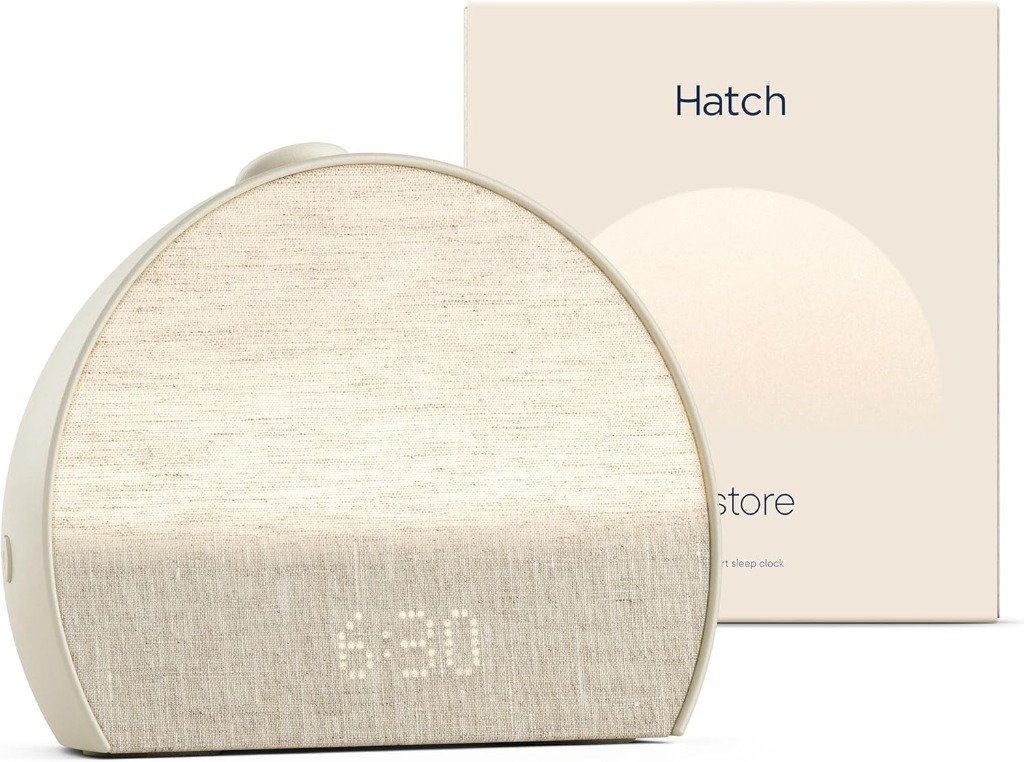
Hatch Restore 3 — Putty
Best for
Replacing the phone on the nightstand with one device for wind-down, sound and wake-up.
What it does well
- Combines light, sound and alarm so the phone can leave the room
- Routines make the wind-down cue automatic
Trade-offs
- Some content sits behind a subscription
- App-driven setup is more involved than a plain alarm
Check price on Amazon View details for Hatch Restore 3 — Putty -
Oura Ring 4
Best for
Readers who want to see what their nights actually look like without wearing a screen or a band to bed, and who will change a habit based on what the data shows rather than only look at it.
What it does well
- Nothing on your wrist and no screen to light up the room, which is the least intrusive way to measure a night
- Reports trends across weeks instead of inviting you to judge yourself on one night
Trade-offs
- The full picture needs a paid Oura membership, billed monthly, on top of the price of the ring
- Ring size is fixed once bought, and you have to order a sizing kit before you can order the ring
Check price on Amazon View details for Oura Ring 4
After the section on a fixed wake time and morning light; tracking tools may appear after the 1-2 week experiment.
The Light Switch: Morning Sunlight
Your internal clock is not exactly 24 hours (it's slightly longer), so it needs to be 'reset' or entrained every single morning. The mechanism for this reset is light hitting your eyes.
Getting outside into direct sunlight for 10 to 15 minutes immediately after waking is the most powerful circadian intervention you can make. The bright lux levels of the sun trigger a massive release of cortisol (the good, waking kind) and set a timer for melatonin release approximately 14 hours later. Looking out a window doesn't count—glass blocks a significant portion of the necessary light spectrum. Step outside.
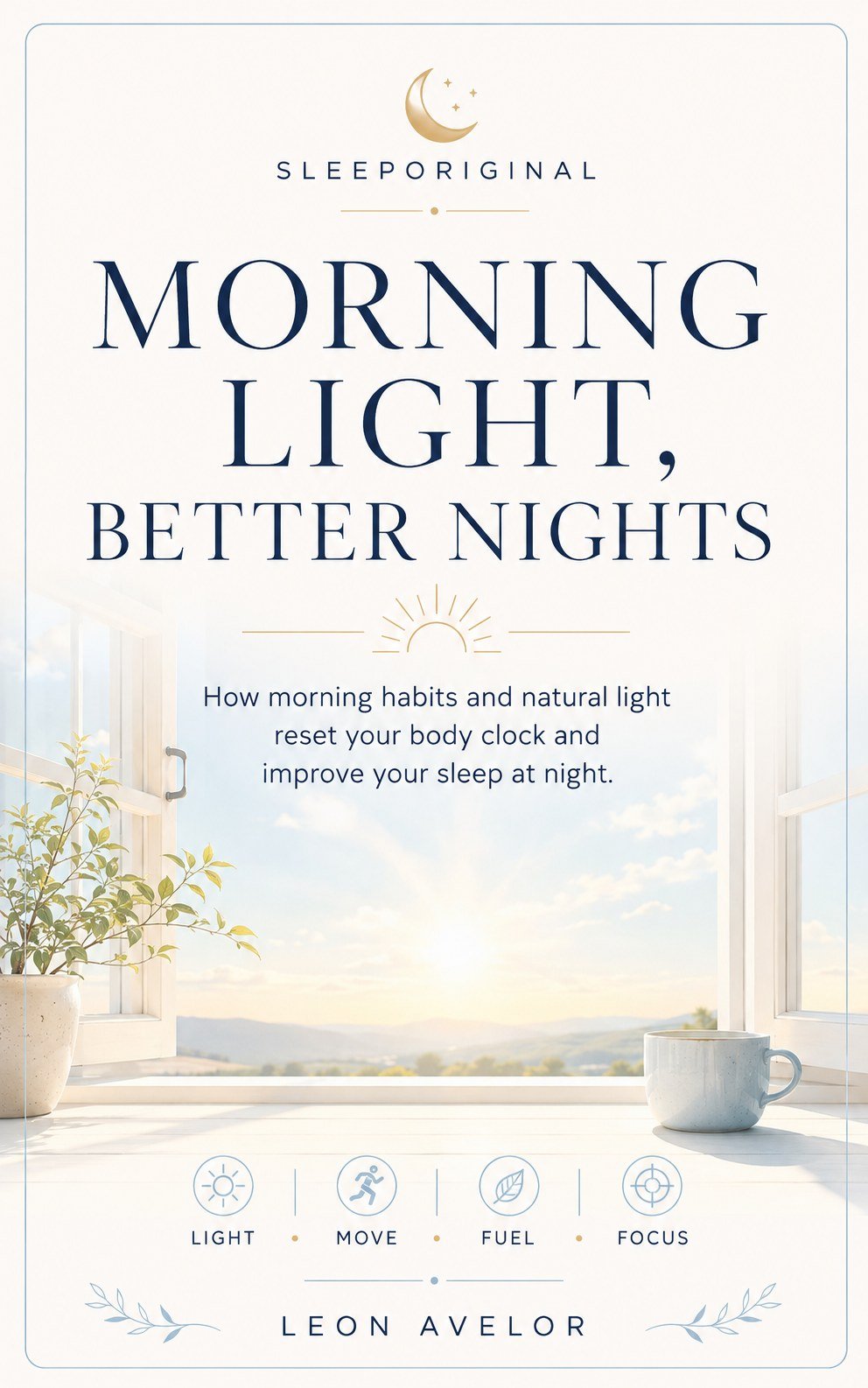
Morning Light, Better Nights
Why the fix for a bad night often belongs in the morning. A simple daylight-and-wake-time routine, including the smallest version that still works on a dark, rushed morning.
Check Price on AmazonThe Evening Wind-Down
Just as bright light in the morning anchors your wakefulness, darkness in the evening anchors your sleep. In the modern world, we extend 'daytime' artificially by staring at bright screens and sitting under LED lights until midnight. This tricks the SCN into thinking the sun is still up, suppressing melatonin.
- Use blue-light blocking glasses or software (like f.lux or Night Shift) on your devices in the evening.
- Dim overhead lights and use floor or table lamps.
- Consider a smart wake-up light that simulates a natural sunset to gently guide your brain into sleep mode.
Tiny Sleep Experiment
The 7-Day Anchor Challenge
- For the next 7 days, set your alarm for the exact same time. Do not hit snooze.
- Within 10 minutes of waking, go outside and get natural sunlight in your eyes for 10 minutes.
- Notice how, by day 4 or 5, you naturally start feeling sleepy at the appropriate time in the evening without forcing it.
Food and Timing
Light is the primary zeitgeber (time-giver), but food is a close second. Your digestive system has its own peripheral clocks. If you eat a massive meal right before bed, you signal to your body that it should be awake and metabolizing, conflicting with the master clock's signal to sleep. Try to finish your last large meal at least three hours before bed.
Final Thoughts
Your body craves rhythm and predictability. By anchoring your wake time, mastering your light exposure, and respecting your biology, you can eliminate the friction of insomnia and morning grogginess. Waking up energized isn't a superpower; it is simply the natural result of a well-aligned circadian clock.
Frequently asked questions
How do I fix my circadian rhythm?
Start with a fixed wake time every day, get outside into daylight within an hour of waking, and dim your evening light. Bedtime follows the clock you set in the morning, not the other way round.
How long does it take to reset a circadian rhythm?
Roughly a day per hour of shift, so a three-hour drift takes about three days to settle. Most people notice the evening sleepiness returning by day four or five of a consistent wake time.
Should I wake up at the same time on weekends?
Yes. Sleeping in on Saturday and Sunday pushes your clock later, so Sunday night arrives before you are tired and Monday morning feels like jet lag — because biologically it is.
Does morning light really matter that much?
It is the single strongest lever. Light hitting the retina sets both the cortisol pulse that wakes you and the timer for melatonin release fourteen or so hours later.
Can I catch up on sleep at the weekend?
Not usefully. If you had a late night, it is better to keep your normal wake time and take a short early-afternoon nap than to sleep in for three hours and lose the anchor.


Join the conversation
Questions and experiences are welcome. Every comment is read by a person before it appears, and your email address is never published.
No comments yet — yours would be the first.