
Insomnia is not a light switch that you can simply flip off when you decide it's time for bed. It is a state of hyperarousal—your nervous system is redlining, treating the silence of your bedroom as a threat. Telling someone with insomnia to 'just relax' is like telling a drowning person to breathe underwater.
If you suffer from chronic sleep onset insomnia (the inability to fall asleep), a standard bedtime routine is not enough. You need a highly structured, biologically targeted 30-minute 'landing sequence.' This sequence must systematically lower your core body temperature, reduce cortisol, and signal absolute safety to your amygdala.
Minute 0 to 10: The Cognitive Offload
The first ten minutes of your wind-down must be dedicated to emptying your brain. Insomnia thrives on unresolved loops: the email you didn't send, the conversation you replayed in your head, the tasks for tomorrow. As long as these loops remain 'open' in your active memory, your brain will refuse to power down because it fears forgetting them.
Catch The Thought
"I'll remember to do that tomorrow, I don't need to write it down."
Your conscious mind might believe that, but your subconscious does not. It will wake you up at 3 AM just to remind you.
Sit in a dimly lit room and perform a comprehensive Brain Dump. Write down everything that is bothering you, every task you need to complete, and every stray thought. By externalizing the data onto physical paper, you close the loops in your brain, signaling that the information is safely stored elsewhere.
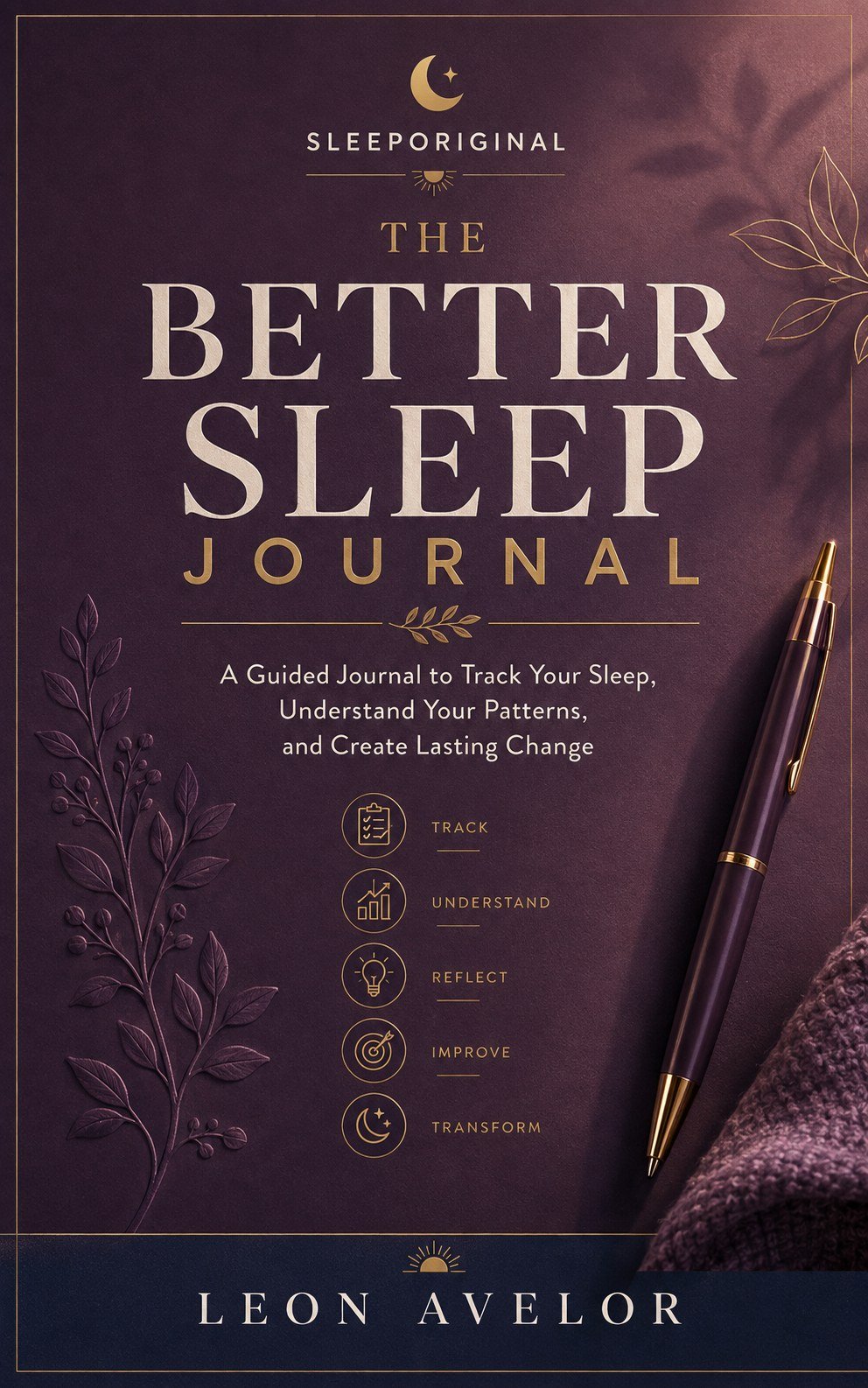
The Sleep Pattern Journal
A guided 30-day journal for noticing your own sleep patterns: what helps, what gets in the way, and what is worth trying next. Observation rather than another programme to follow.
Check Price on AmazonMinute 10 to 20: The Thermal Drop
Insomniacs often have a core body temperature that is slightly elevated compared to normal sleepers, which prevents them from crossing the threshold into Stage 1 light sleep. You must force a rapid thermal drop.
Spend the next ten minutes taking a warm (not scalding hot) shower or bath. The warm water draws blood from your core to the surface of your skin (vasodilation). When you step out of the shower into a cool room, that heat rapidly evaporates off your skin. This artificial, rapid drop in core body temperature is one of the most powerful sleep-inducing biological signals available to you.
Products placed inside the timeline
Turn the routine into a repeatable sequence with fewer phone distractions.
-
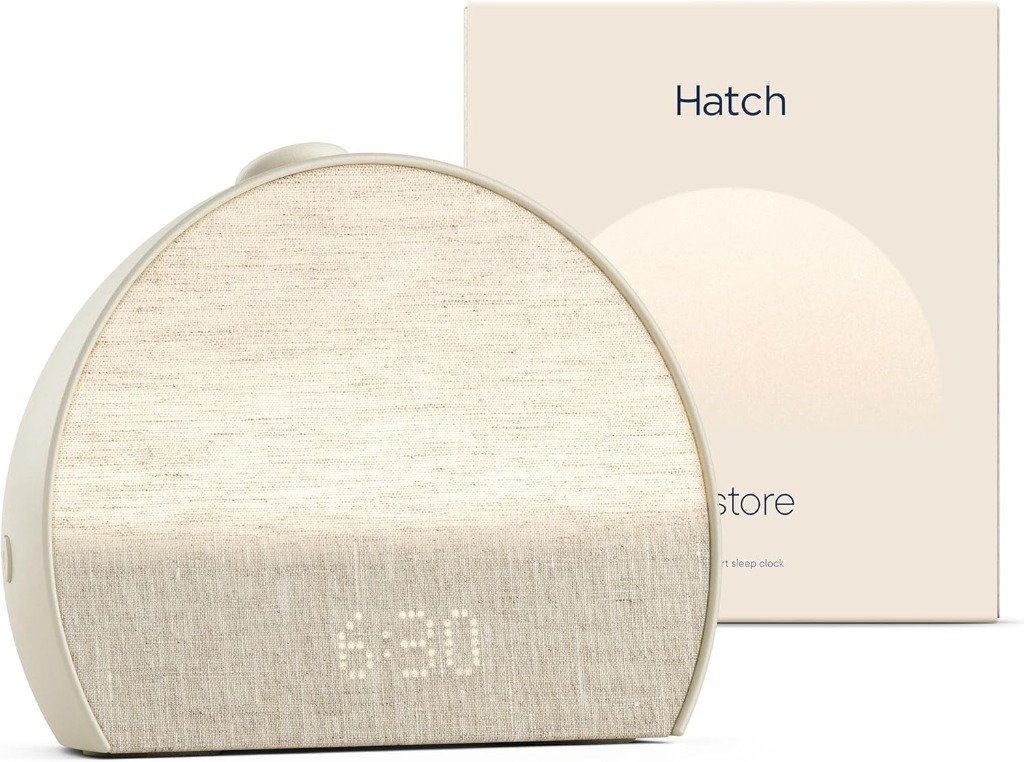
Hatch Restore 3 — Putty
Best for
Replacing the phone on the nightstand with one device for wind-down, sound and wake-up.
What it does well
- Combines light, sound and alarm so the phone can leave the room
- Routines make the wind-down cue automatic
Trade-offs
- Some content sits behind a subscription
- App-driven setup is more involved than a plain alarm
Check price on Amazon View details for Hatch Restore 3 — Putty -
Manta PRO Sleep Mask
Best for
Shift workers, side sleepers, and anyone who has tried flat masks and still gets light leaking in around the nose.
What it does well
- Eye cups reposition along the strap to match your own face
- Domed cups keep pressure off the eyelids and allow blinking
Trade-offs
- Noticeably bulkier than a flat silk or fabric mask
- Sits at the premium end of the sleep-mask market
-
Yogasleep Dohm Classic White-Noise Machine — White
Best for
Anyone who wants real fan-driven sound rather than a looping recording, and who values a device with no settings to manage.
What it does well
- Mechanical airflow means there is no loop or seam to notice
- Tone collar adjusts the character of the sound, not just volume
Trade-offs
- One sound only — no rain, ocean or brown-noise options
- Mains powered and not pocket sized, so it is a poor travel choice
-
Loop Dream Sleep Earplugs — Black
Best for
Side sleepers, anyone sharing a bed with a snorer, and people who have abandoned foam plugs because of pressure or soreness.
What it does well
- Low-profile body designed specifically for side sleeping
- Oval tips follow the ear canal shape rather than forcing a round fit
Trade-offs
- Fit varies with ear anatomy — no earplug suits every ear, and this is the main variable
- Costs considerably more up front than disposable foam plugs
-
Soundcore Sleep A30 by Anker
Best for
Shared rooms and partner snoring, where masking has to happen in your ear rather than the room.
What it does well
- Masking sound without disturbing anyone else in the room
- Low-profile build aimed at side sleeping
Trade-offs
- Needs charging, so a flat battery means no masking
- Earbuds in bed do not suit everyone
Check price on Amazon View details for Soundcore Sleep A30 by Anker
Place one product beside the relevant lighting, sound, and blackout steps; show the full routine before the sales block.
Minute 20 to 30: Acoustic and Visual Deprivation
For the final ten minutes, you must protect your visual and auditory inputs. Do not look at a screen. Even 'Night Mode' on your phone emits enough lux to suppress melatonin if held close to your face.
Get into bed. The room should be pitch black. If your environment is noisy, or if the sheer silence of the room makes your ears ring and your anxiety spike, use acoustic masking. A high-quality white noise machine provides a constant, predictable auditory blanket that drowns out sudden spikes in environmental noise and gives your brain a neutral focal point.
Yogasleep Dohm Classic White-Noise Machine — White
A real fan in a plastic shell, producing white noise mechanically instead of playing a recording.
Check Price on AmazonTiny Sleep Experiment
The 4-7-8 Breathing Technique
- Once in bed, perform this breathing exercise designed to act as a natural tranquilizer for the nervous system:
- Exhale completely through your mouth.
- Close your mouth and inhale quietly through your nose to a mental count of **4**.
- Hold your breath for a count of **7**.
- Exhale completely through your mouth to a count of **8**.
- Repeat this cycle four times.
The Rule of the 'Failed' Routine
Important Safety Note
If you complete this 30-minute routine, get into bed, and are still wide awake after 20 minutes, DO NOT STAY IN BED. Get up. Go to another room. Read a boring book under dim light until your eyes are physically heavy, then try again.
Staying in bed while anxious trains your brain that the bed is a place of suffering. The routine is not a magic spell; it is a primer. If the primer doesn't work on the first try, you must break the association before frustration sets in.
Summary
A successful wind-down routine for insomnia requires active intervention. By cognitively offloading your worries, forcing a thermal drop via a warm shower, and utilizing acoustic masking, you systematically dismantle the hyperarousal that is keeping you awake.
Frequently asked questions
How long should a wind-down routine be?
Thirty minutes is enough if it is structured. What matters is that it is the same sequence every night, because the predictability is what does the signalling.
What should I do in the last 30 minutes before bed?
Empty your head onto paper, take a warm shower, then protect your eyes and ears. In that order — the cognitive offload first, the thermal drop second, and darkness and sound last.
Does a warm shower before bed really help?
Yes, and the mechanism is the cooling afterwards. Warm water draws blood to the skin; stepping out into a cool room evaporates that heat and drops your core temperature, which is a strong sleep signal.
What if I finish the routine and still cannot sleep?
Get up. After about 20 minutes awake, leave the room, read something dull under dim light until your eyes are heavy, and come back. Staying in bed while frustrated trains the bed as a place of struggle.
Can I read during the wind-down?
Yes, on paper and under dim warm light. Reading is a good use of the last stretch as long as it is not on a screen and not something that raises your heart rate.
Join the conversation
Questions and experiences are welcome. Every comment is read by a person before it appears, and your email address is never published.
No comments yet — yours would be the first.