
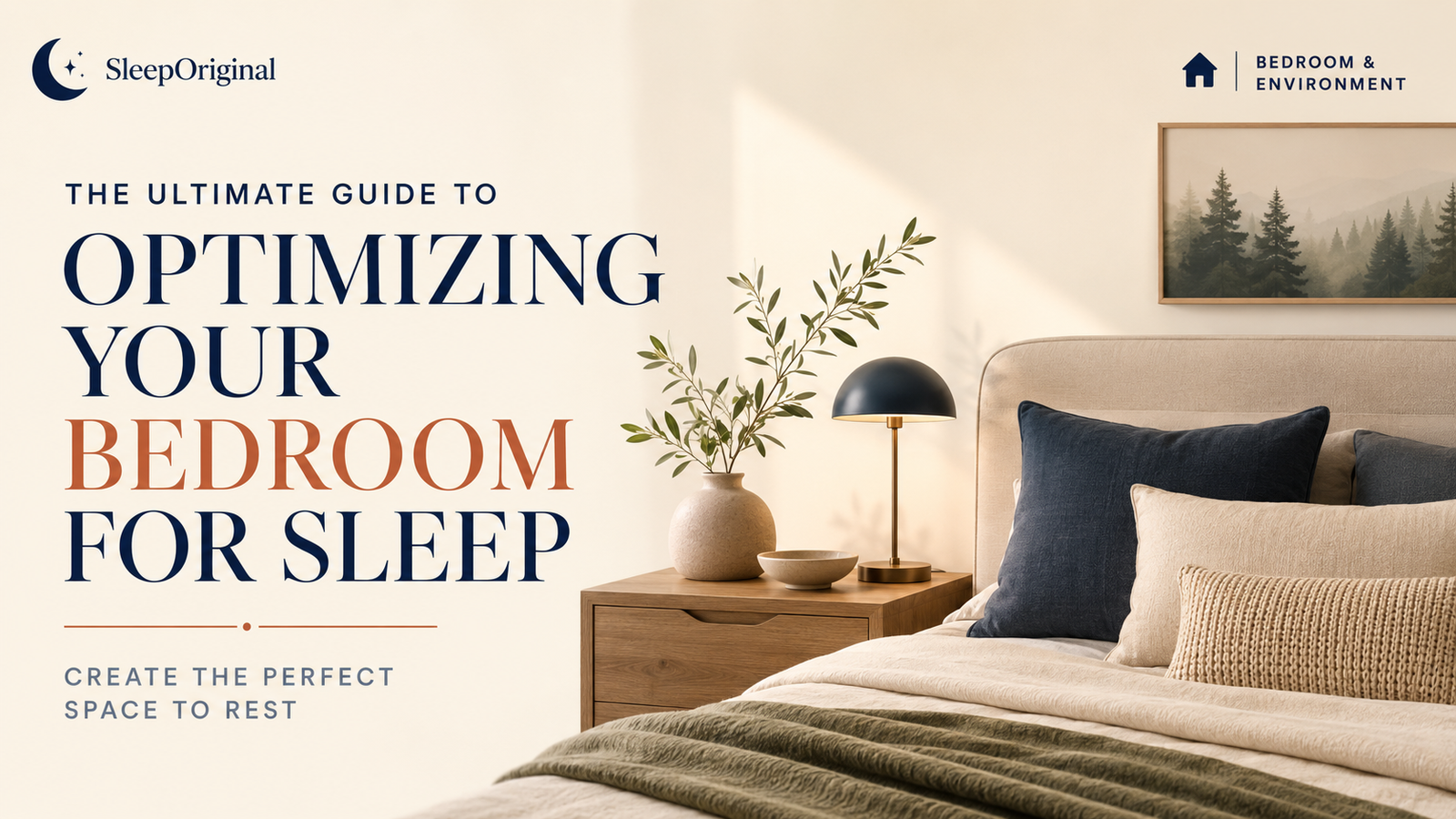
Your bedroom is more than just a room with a bed in it; it is an environmental trigger. Just like a kitchen signals hunger and a home office signals work, your bedroom should unconsciously signal to your brain that it is time to power down. Unfortunately, most modern bedrooms do the exact opposite.
With glowing LEDs on chargers, chaotic clutter on nightstands, central heating blasting hot air, and smartphones vibrating on the pillow, we have engineered sleeping environments that actively antagonize our biology. The good news? Optimizing your bedroom for deep, uninterrupted sleep is one of the easiest biohacks available. It requires no willpower, just a few physical changes to your environment.
1. The Bat Cave Principle: Absolute Darkness
Light is the single most powerful regulator of your circadian rhythm. When photons hit the retina—even through closed eyelids—they signal the suprachiasmatic nucleus in your brain to halt the production of melatonin, the sleep hormone. This is why even a small streetlamp outside your window or the blue LED on your TV can disrupt your sleep architecture.
Catch The Thought
"I sleep fine with a little bit of light."
You might fall asleep, but clinical studies show that ambient light during sleep prevents the brain from dropping into the deepest, most restorative stages of slow-wave sleep. You are surviving, not thriving.
The goal is pitch black. You should not be able to see your hand in front of your face. To achieve this, you need two things:
NICETOWN 100% Blackout Curtain Panels — 52 x 84 Inches, Set of 2
Best bedroom light-control product
Check Price on Amazon- **True Blackout Curtains:** Not just 'room darkening' shades, but heavy-duty blackout curtains that seal against the wall.
- **Electrical Tape:** Buy a roll of black electrical tape and cover every single LED light in your room—the smoke detector, the AC unit, the TV standby light.
2. The Thermal Drop: Keep It Cool
Your core body temperature naturally drops by about 1 to 2 degrees Fahrenheit as you transition into sleep. If your room is too warm, your body cannot shed this heat, leading to restlessness, night sweats, and fragmented sleep.
The clinically optimal temperature for sleep is surprisingly cold: between 60°F and 67°F (15°C to 19°C).
- Set your thermostat to drop an hour before your target bedtime.
- If you share a bed with someone who runs hot, consider active cooling systems that blow air under the sheets, or specialized cooling comforters.
BedJet 3 Climate Comfort System
Best premium bed-climate product
Check Price on AmazonStaged bedroom-audit grid
Fix the biggest bedroom disruption first instead of buying everything at once.
-
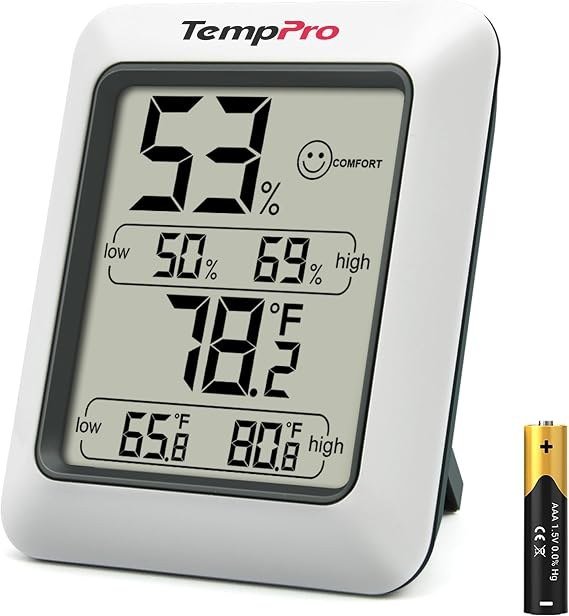
ThermoPro TP50 Temperature and Humidity Monitor
Best for
Finding out what your bedroom actually does overnight before spending on any fix.
Check price on Amazon View details for ThermoPro TP50 Temperature and Humidity Monitor -
Levoit Core 300S-P Smart Air Purifier — White
Best for
Smaller bedrooms where dust or pet dander is the main air complaint.
What it does well
- Sized sensibly for a bedroom rather than a living room
- App control and scheduling
Trade-offs
- Filters are an ongoing cost
- Higher speeds are audible
Check price on Amazon View details for Levoit Core 300S-P Smart Air Purifier — White -
Blueair Blue Pure 411i Max Smart Air Purifier
Best for
Readers who want quiet particle filtering in a small footprint with minimal fuss.
What it does well
- Very small footprint for a bedside or corner
- Quiet at the speeds you would actually sleep with
Trade-offs
- Ongoing filter replacement cost
- Best suited to smaller rooms
Check price on Amazon View details for Blueair Blue Pure 411i Max Smart Air Purifier -
Levoit Classic 300S Smart Humidifier
Best for
Dry winter bedrooms where you wake with a dry throat or nose.
What it does well
- Addresses dryness that heating causes
- Scheduling and control without getting up
Trade-offs
- Needs regular refilling and genuine cleaning
- Overshooting humidity creates its own problems
Check price on Amazon View details for Levoit Classic 300S Smart Humidifier -
Beckham Hotel Collection Bed Pillows — Standard/Queen, Set of 2
Best for
Guest rooms, budget bedroom refreshes, and anyone who prefers a soft sink-in pillow and does not mind fluffing it each morning.
What it does well
- Plush, hotel-style feel straight out of the bag
- Two pillows for the price many brands charge for one
Trade-offs
- Flattens within the first few nights and needs regular fluffing
- Tom's Guide reports inconsistent support for people who change position overnight
Add contextual links inside temperature, air quality, humidity, light, and noise sections; finish with budget/mid-range/premium stages.
3. Acoustic Isolation: The Power of White Noise
Unless you live in an isolated cabin, you are surrounded by unpredictable anthropogenic noise: sirens, barking dogs, neighbors, or just the creaking of an old house. These intermittent noises trigger your evolutionary 'fight or flight' response, yanking you out of deep sleep even if you don't fully wake up to remember it.
The solution is not necessarily earplugs (which can be uncomfortable and cause wax buildup), but acoustic masking. A high-quality white noise machine creates a constant, soothing frequency that drowns out sudden spikes in ambient noise.
Yogasleep Dohm Classic White-Noise Machine — White
A real fan in a plastic shell, producing white noise mechanically instead of playing a recording.
Check Price on Amazon4. Air Quality and Humidity
Stale, dry air ruins sleep. If you wake up with a dry throat, congested nose, or a headache, your bedroom's air quality is likely the culprit. Proper ventilation reduces CO2 buildup, which has been directly linked to better cognitive performance the next day.
Maintain humidity between 40% and 60%. If it is too dry (common in winter), use a humidifier to keep your nasal passages moist, preventing snoring. If it is too humid, use a dehumidifier to prevent mold and dust mites.
Tiny Sleep Experiment
The Bedroom Purge
- Remove everything from your bedroom that is not related to sleep or intimacy.
- No laundry baskets, no work laptops, no exercise bikes.
- If you cannot remove the TV, unplug it and cover it with a blanket at night so the screen isn't reflecting light.
Levoit Classic 300S Smart Humidifier
Best smart bedroom humidifier
Check Price on AmazonSummary: The Ultimate Sanctuary
Think of your bedroom as a sensory deprivation chamber designed exclusively for recovery. By making it cold, dark, quiet, and clean, you remove the environmental friction that causes insomnia. You don't have to 'try' to sleep; you just have to create the environment where sleep is inevitable.
Frequently asked questions
How do I optimise my bedroom for sleep?
Treat it as removing friction rather than buying equipment. Work through darkness, temperature, sound and air in that order, and fix the one that is obviously worst before touching the others.
How dark should a bedroom be?
Dark enough that you cannot see your hand in front of your face. Light reaches the retina through closed eyelids, so a standby LED or a streetlamp is enough to suppress melatonin.
What temperature should a bedroom be?
Between 60°F and 67°F (15°C to 19°C). Your core temperature has to drop for sleep to begin, and a warm room prevents your body from shedding that heat.
Does bedroom air quality affect sleep?
Yes. Stale air raises CO2, which has been linked to worse next-day cognitive performance, and dry air causes the sore throat and congestion that fragment the second half of the night.
What should I take out of the bedroom?
Anything not related to sleep or intimacy — work laptops, laundry, exercise equipment. If a television cannot be removed, unplug it and cover it so the screen is not reflecting light.
Join the conversation
Questions and experiences are welcome. Every comment is read by a person before it appears, and your email address is never published.
No comments yet — yours would be the first.