
It is the most frustrating time of the night. You look at the clock, and the glowing red numbers read 3:17 AM. The house is completely silent, but your brain is suddenly wide awake, cycling through anxieties, to-do lists, and profound existential dread. You toss, you turn, and before you know it, your alarm is going off for work.
Waking up in the middle of the night—specifically around 3 AM or 4 AM—is one of the most common sleep complaints globally. It feels like a glitch in your biology. But understanding why this happens is the first step to stopping it. You are not broken; your body is simply responding to chemical triggers at the wrong time.
Bedroom disruption audit
Check simple bedroom disruptions before changing your whole routine.
-
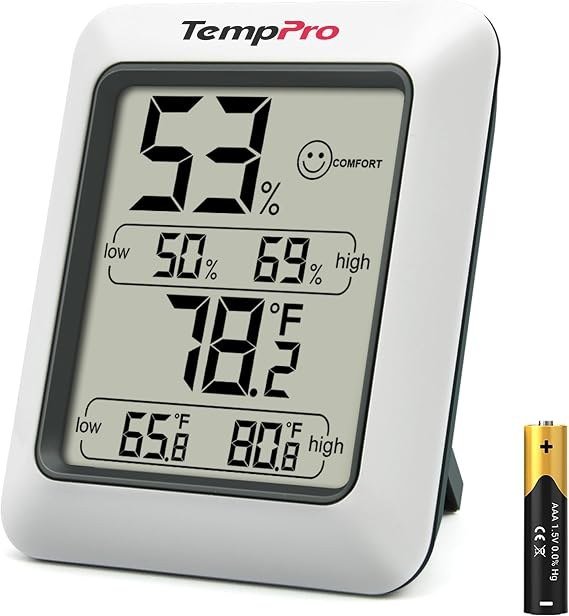
ThermoPro TP50 Temperature and Humidity Monitor
Best for
Finding out what your bedroom actually does overnight before spending on any fix.
Check price on Amazon View details for ThermoPro TP50 Temperature and Humidity Monitor -
Yogasleep Dohm Classic White-Noise Machine — White
Best for
Anyone who wants real fan-driven sound rather than a looping recording, and who values a device with no settings to manage.
What it does well
- Mechanical airflow means there is no loop or seam to notice
- Tone collar adjusts the character of the sound, not just volume
Trade-offs
- One sound only — no rain, ocean or brown-noise options
- Mains powered and not pocket sized, so it is a poor travel choice
-
Manta PRO Sleep Mask
Best for
Shift workers, side sleepers, and anyone who has tried flat masks and still gets light leaking in around the nose.
What it does well
- Eye cups reposition along the strap to match your own face
- Domed cups keep pressure off the eyelids and allow blinking
Trade-offs
- Noticeably bulkier than a flat silk or fabric mask
- Sits at the premium end of the sleep-mask market
-
Levoit Classic 300S Smart Humidifier
Best for
Dry winter bedrooms where you wake with a dry throat or nose.
What it does well
- Addresses dryness that heating causes
- Scheduling and control without getting up
Trade-offs
- Needs regular refilling and genuine cleaning
- Overshooting humidity creates its own problems
Check price on Amazon View details for Levoit Classic 300S Smart Humidifier
Immediately after the section on temperature, noise, light, and dry air; add one end-of-article checklist.
The Cortisol Awakening Response (Misfiring)
To understand the 3 AM wake-up, we have to look at two hormones: Melatonin (the sleep hormone) and Cortisol (the stress and wakefulness hormone).
Under normal conditions, your melatonin levels peak around midnight and slowly taper off. Conversely, your cortisol levels are at their lowest at midnight and begin a slow, gradual climb, peaking just before you wake up at 7 AM. This gradual cortisol rise is what signals your body to wake up naturally.
Catch The Thought
"But I'm not stressed! Why am I waking up in a panic?"
Chronic, low-grade daytime stress elevates your baseline cortisol. If your cortisol is already high when you go to bed, the natural early-morning rise pushes it over the 'wake-up' threshold hours too early—usually right around 3 AM.
The Blood Sugar Rollercoaster
Another massive contributor to the 3 AM wake-up is hypoglycemia (low blood sugar). While you sleep, your brain still requires a constant supply of glucose. If you ate a high-carbohydrate, sugary dessert right before bed, your blood sugar spikes, causing your pancreas to release a large amount of insulin.
By 3 AM, that insulin has done its job too well, causing your blood sugar to crash. Your brain perceives this crash as a life-threatening emergency. To save you, it dumps adrenaline and cortisol into your system to force your liver to release stored glucose. This adrenaline dump snaps you wide awake, heart pounding.

Your Day Shapes Your Night
Sleep does not begin at bedtime. A practical guide to caffeine, meals, movement and the daytime habits that decide how the night goes — what to move, when, and why.
Check Price on AmazonThe Liver and Traditional Chinese Medicine
Interestingly, Traditional Chinese Medicine (TCM) has posited for centuries that the liver is most active between 1 AM and 3 AM. Modern chronobiology somewhat supports this: the liver is working incredibly hard to process toxins (including alcohol) during this time. If you had a few drinks before bed, the metabolic byproduct (acetaldehyde) acts as a stimulant, often waking you up exactly at this time.
How to Stop the Cycle
1. Do Not Look at the Clock
The moment you look at the clock and see 3:00 AM, you do math: 'If I fall asleep now, I'll only get three hours of sleep.' This math creates performance anxiety, triggering a secondary wave of adrenaline that guarantees you won't sleep. Turn the clock around. It doesn't matter what time it is.
2. The Blood Sugar Stabilizer
If you suspect blood sugar crashes are waking you up, try a tiny, high-fat, high-protein snack about 30 minutes before bed. A spoonful of almond butter or a slice of turkey provides slow-burning energy that prevents the 3 AM adrenaline dump.
Tiny Sleep Experiment
The 20-Minute Reset
- If you are awake at 3 AM for more than 20 minutes, get out of bed.
- Staying in bed trains your brain that the bed is a place for anxiety.
- Go to a dimly lit room and do something boring until you feel sleepy again.
3. Limit Evening Alcohol
Even one glass of wine can cause the 'rebound effect' in the second half of the night. If you suffer from 3 AM wake-ups, cut out all alcohol within three hours of bedtime for two weeks and observe the difference.
Summary
The 3 AM wake-up is usually a sign of metabolic or hormonal distress—either from chronic stress, blood sugar crashes, or alcohol metabolism. By stabilizing your diet before bed, managing evening stress, and refusing to engage with the clock, you can train your body to sleep soundly through the night.
Frequently asked questions
Why do I wake up at 3am every night?
Most often because cortisol is arriving early. Cortisol bottoms out around midnight and climbs toward morning; if your baseline is already high from chronic stress, that climb crosses the waking threshold hours before your alarm.
Is waking at 3am a sign of stress?
It frequently is, even when you do not feel stressed in the moment. Low-grade daytime stress raises the baseline that the natural overnight rise is added to.
Does alcohol cause 3am waking?
Yes. Your liver metabolises alcohol overnight, and the byproduct acetaldehyde acts as a stimulant — which is why one evening glass of wine so often shows up as a wake-up in the second half of the night.
Should I eat something before bed to stop it?
If you suspect a blood-sugar crash, a small high-fat, high-protein snack about 30 minutes before bed can help — a spoonful of nut butter or a slice of turkey. Sugar before bed does the opposite.
Why should I not look at the clock?
Because seeing the time makes you calculate how little sleep is left, and that calculation produces a second wave of adrenaline. Turn the clock around.

Join the conversation
Questions and experiences are welcome. Every comment is read by a person before it appears, and your email address is never published.
No comments yet — yours would be the first.