
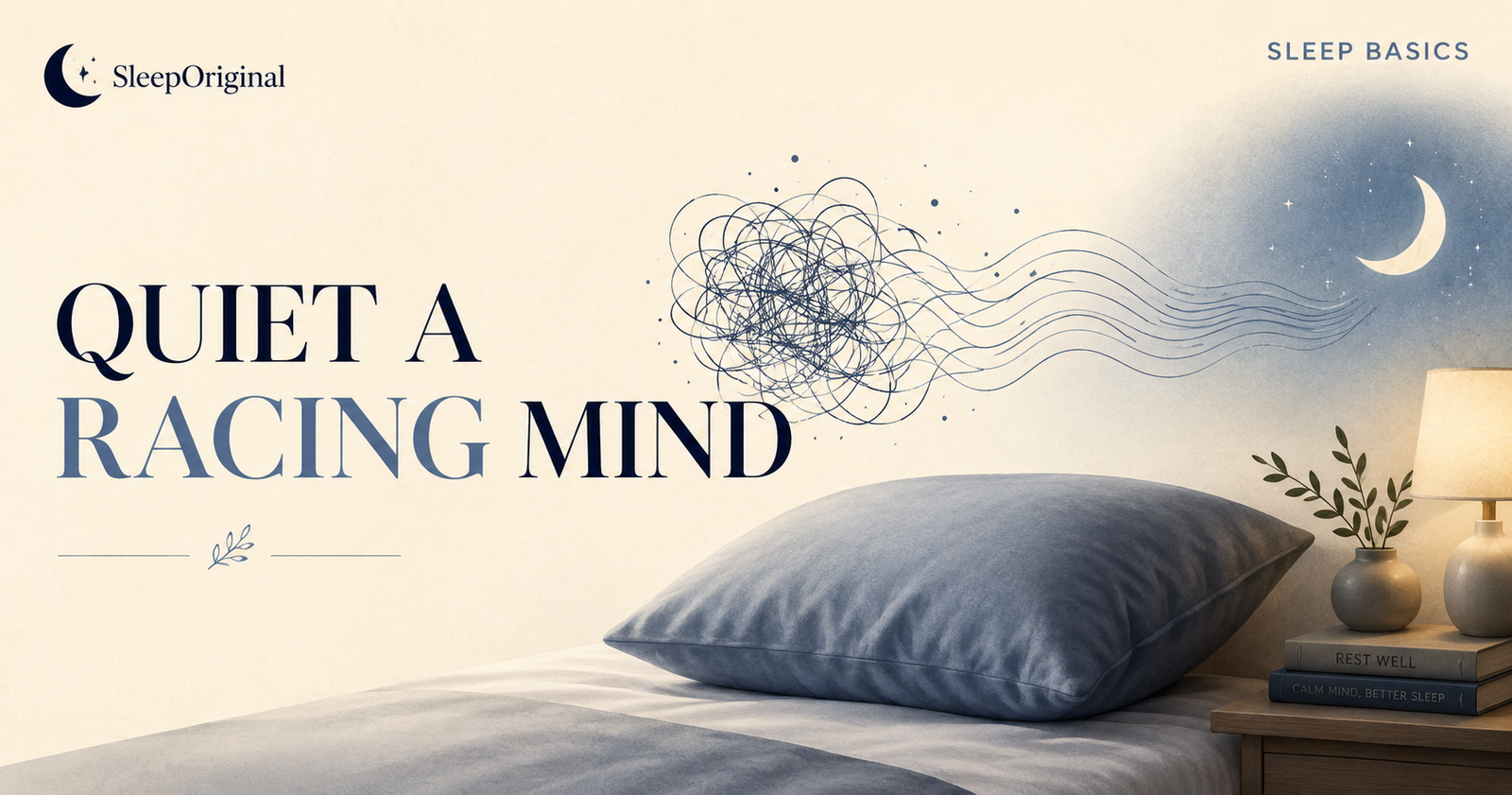
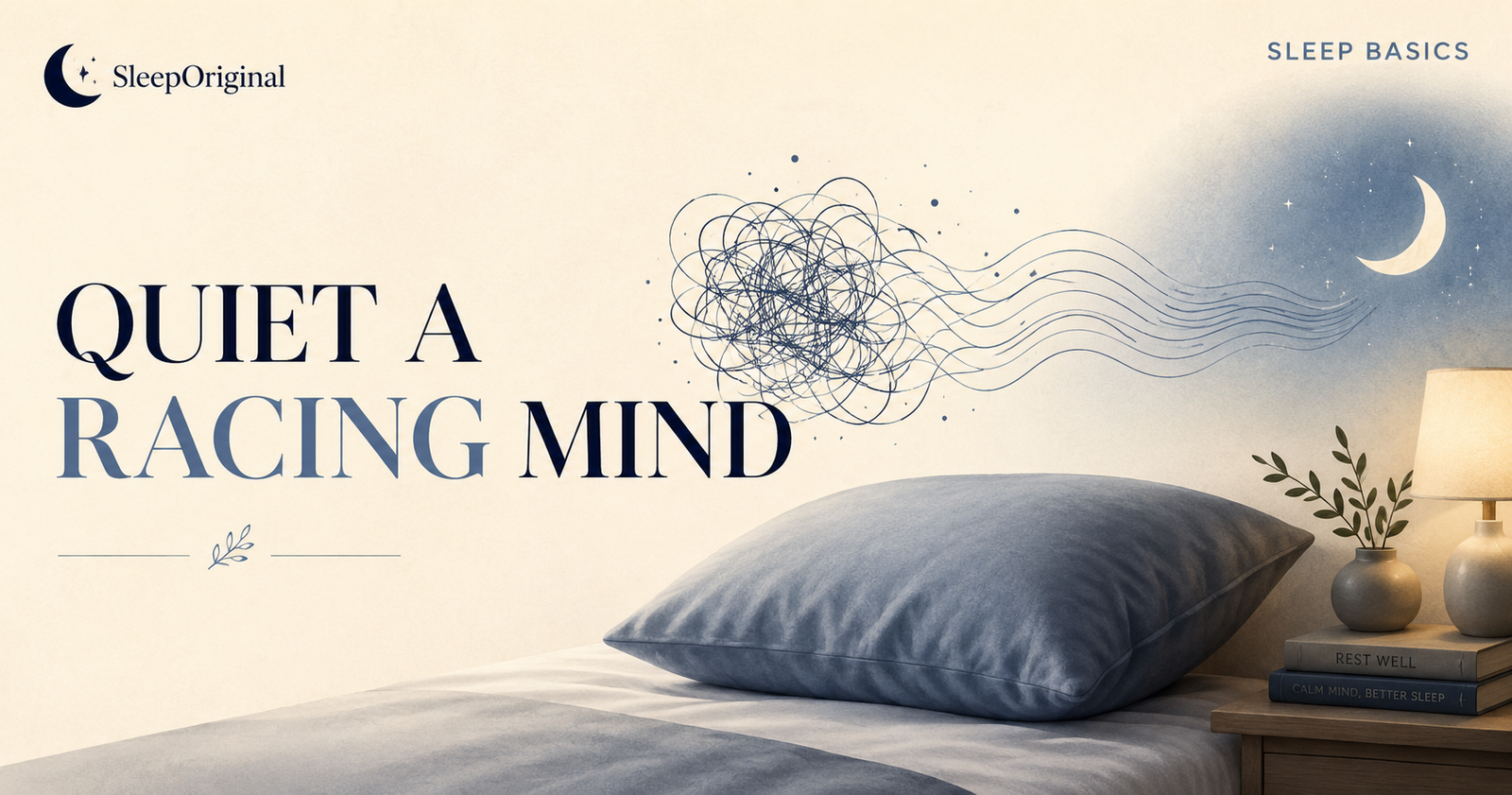
You know the feeling. You are exhausted all day, counting down the hours until you can finally get into bed. You do everything right: you dim the lights, you brush your teeth, you crawl under the covers. But the second your head hits the pillow, it begins. The mental barrage. Did I send that email? What if the car needs new brakes? I should have said something different in that meeting three years ago.
Racing thoughts at night are one of the most universally frustrating experiences. They transform what should be a peaceful retreat into a battleground of anxiety and rumination. The harder you try to stop thinking, the more aggressively the thoughts rebound. This phenomenon is incredibly common, but the conventional advice—"just relax" or "clear your mind"—is not just unhelpful; it is neurobiologically impossible.
Why Your Brain Turns on at Night
To solve the problem of nighttime rumination, we first have to understand why it happens exactly when we want it least. During the day, your brain is constantly processing external stimuli. You are navigating traffic, responding to messages, talking to colleagues, and consuming media. This constant influx of external data requires cognitive bandwidth, leaving little room for internal rumination.
When you turn off the lights and lie in bed, that external distraction drops to zero. In the sudden silence, your brain switches to its Default Mode Network (DMN). The DMN is the brain's internal processing system. It is responsible for daydreaming, planning the future, and analyzing the past. Because there are no external tasks to focus on, the DMN kicks into high gear, processing unresolved loops from the day.
Catch The Thought
"If I don't figure this out right now, I'm going to fail tomorrow."
This is your brain's threat-detection system misfiring. Evolutionarily, we are wired to pay attention to potential threats. In the quiet of the night, minor anxieties are magnified because there is nothing else competing for your attention.
The Paradox of Trying to Sleep
When racing thoughts start, our natural reaction is to fight them. We tell ourselves, "Stop thinking. Go to sleep." But sleep is a passive process. You cannot force it. The more effort you expend trying to shut your brain down, the more you activate your sympathetic nervous system—the "fight or flight" response. This releases cortisol and adrenaline, the exact hormones that keep you awake.
This creates a vicious cycle: you worry about something, which keeps you awake. Then you start worrying about the fact that you are awake and how tired you will be tomorrow. Now you have secondary anxiety layered over the primary anxiety.
Technique 1: Cognitive Dumping (The Brain Dump)
If your brain is keeping you awake because it is terrified you will forget something important, the most effective strategy is to externalize the thoughts. This is known as a "brain dump" or cognitive offloading.
When you write a worry down, you signal to your brain that the information is safely stored elsewhere. You no longer need to use active cognitive bandwidth to hold onto it. The key is to do this correctly: not on a digital device, which emits alerting blue light, but on physical paper.
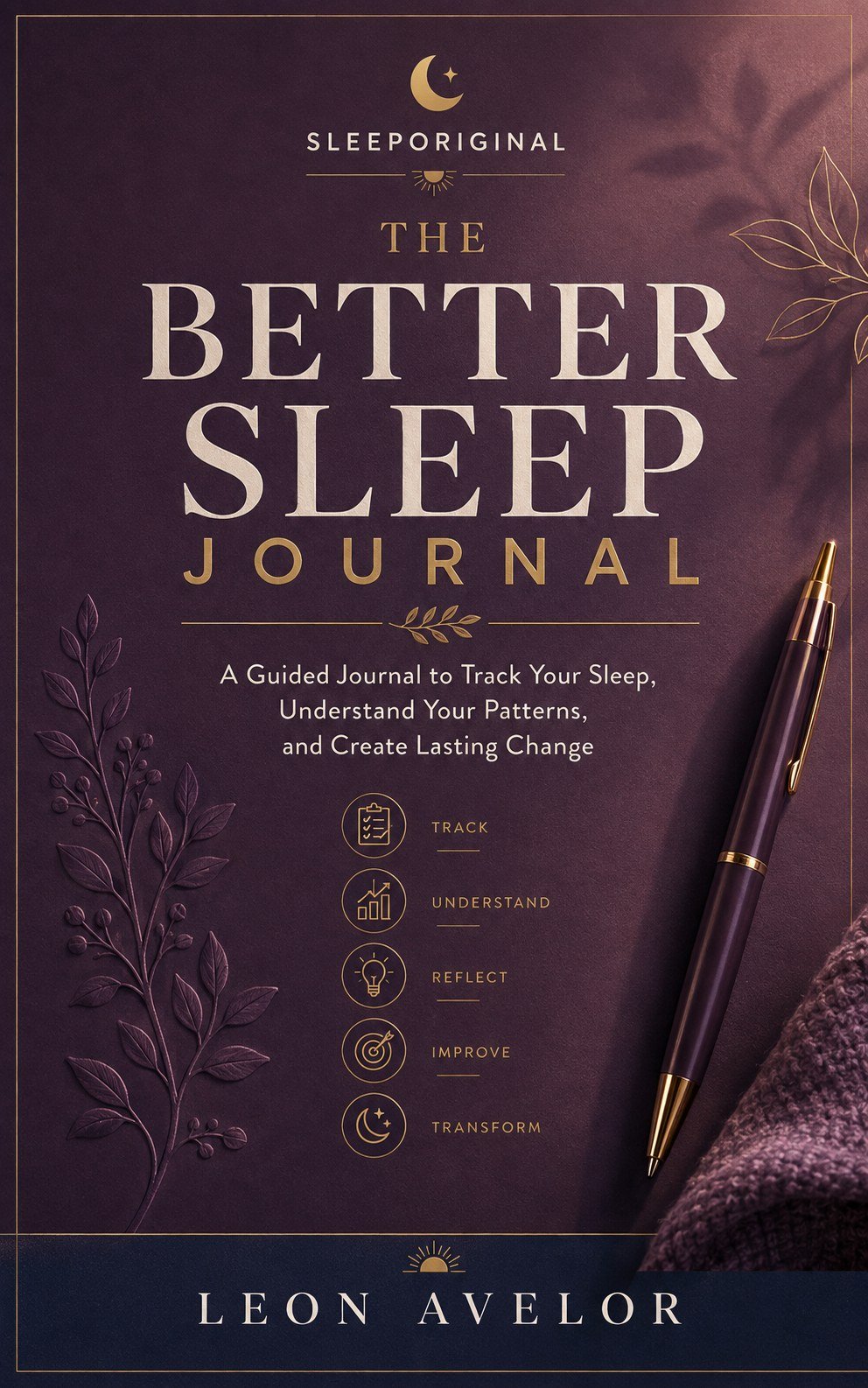
The Sleep Pattern Journal
A guided 30-day journal for noticing your own sleep patterns: what helps, what gets in the way, and what is worth trying next. Observation rather than another programme to follow.
Check Price on AmazonKeep a dedicated notebook by your bed. If you catch yourself ruminating for more than ten minutes, turn on a dim, warm-toned light, sit up slightly, and write down every single thing on your mind. Do not format it. Do not worry about grammar. Just get it out of your head and onto the page. Once it is written, mentally tell yourself, "The day is closed. These problems are scheduled for tomorrow."
Technique 2: Paradoxical Intention
This is a classic cognitive behavioral therapy for insomnia (CBT-I) technique. Instead of trying desperately to fall asleep, you lie in bed with your eyes open and tell yourself that your goal is to stay awake for just a few more minutes. You do not look at your phone or read; you simply lie in the dark and accept being awake.
By removing the pressure and "performance anxiety" of having to fall asleep, you drastically reduce your sympathetic arousal. The irony is that by giving yourself permission to stay awake, sleep often sneaks up on you.
Tiny Sleep Experiment
The 5-Minute Acceptance Rule
- Tonight, if you find your thoughts racing, stop fighting them.
- Tell yourself: "It is perfectly okay that I am awake right now. I am resting my body."
- Observe your thoughts like cars passing on a highway. Do not try to stop the traffic; just watch it go by without jumping into the cars.
Technique 3: The 15-Minute Evening Landing
Racing thoughts in bed are often a symptom of poor boundaries between your waking day and your sleep period. If you go straight from answering emails or watching intense television to lying in the dark, your brain has no transition period. It is like driving a car at 70 mph and suddenly slamming it into park.
You need a structured transition—a "landing sequence." This should be a 15 to 30-minute period before bed where you intentionally downshift. This means putting away highly stimulating activities and engaging in predictable, low-stakes routines.
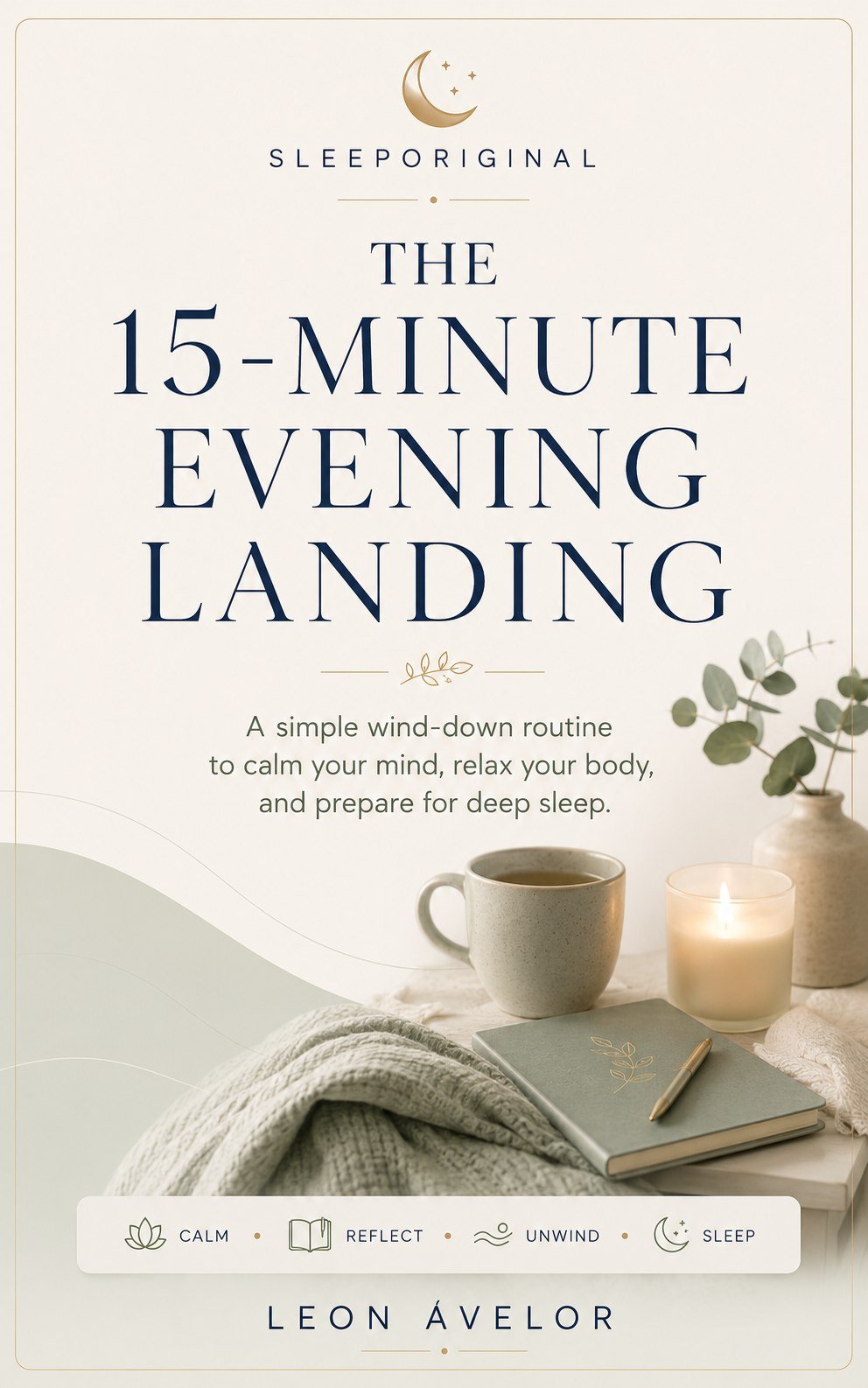
The 15-Minute Evening Landing
A fifteen-minute wind-down sequence in three five-minute parts: close the day, lower stimulation, prepare for rest. Includes a shorter version for evenings that end too late.
Check Price on AmazonA good landing sequence might involve basic hygiene routines performed mindfully, laying out clothes for the next day, reading a physical book (fiction is better than non-fiction for sleep, as it engages the imagination rather than the problem-solving centers), or gentle stretching.
Technique 4: Cognitive Shuffling
If you are actively in bed and the thoughts won't stop, you need to short-circuit the verbal, logical part of your brain. Cognitive shuffling is a technique that mimics the random, nonsensical imagery that naturally occurs right before we fall asleep (hypnagogic imagery).
Here is how to do it: Think of a neutral word with at least five letters, like "BEDTIME". Focus on the first letter, B. Now, visualize as many neutral objects starting with B as you can. A banana. A boat. A brick. A balloon. Visualize each one for a few seconds. When you run out of B words, move to E. An elephant. An envelope. An egg.
This task is engaging enough to distract you from your anxieties, but boring and disjointed enough that it doesn't trigger analytical thinking. It essentially bores your brain into sleep.
When to Get Out of Bed
If you have been lying in bed with racing thoughts for what feels like 20 minutes, staying there is counterproductive. Your brain is a highly associative organ. If you spend hours in bed tossing, turning, and worrying, your brain will start to associate the physical bed with anxiety rather than sleep.
Important Safety Note
This is a critical tenet of CBT-I: The bed must be reserved strictly for sleep and intimacy. Do not lie awake in bed for long periods. Doing so trains your brain to treat the bed as a worry-chair.
Get out of bed. Go to another room that is dimly lit. Do something profoundly boring, like reading a manual or knitting, until your eyelids feel heavy. Only then should you return to bed. You are rebuilding the association that bed equals sleep, and nothing else.
The Role of Daytime Caffeine and Cortisol
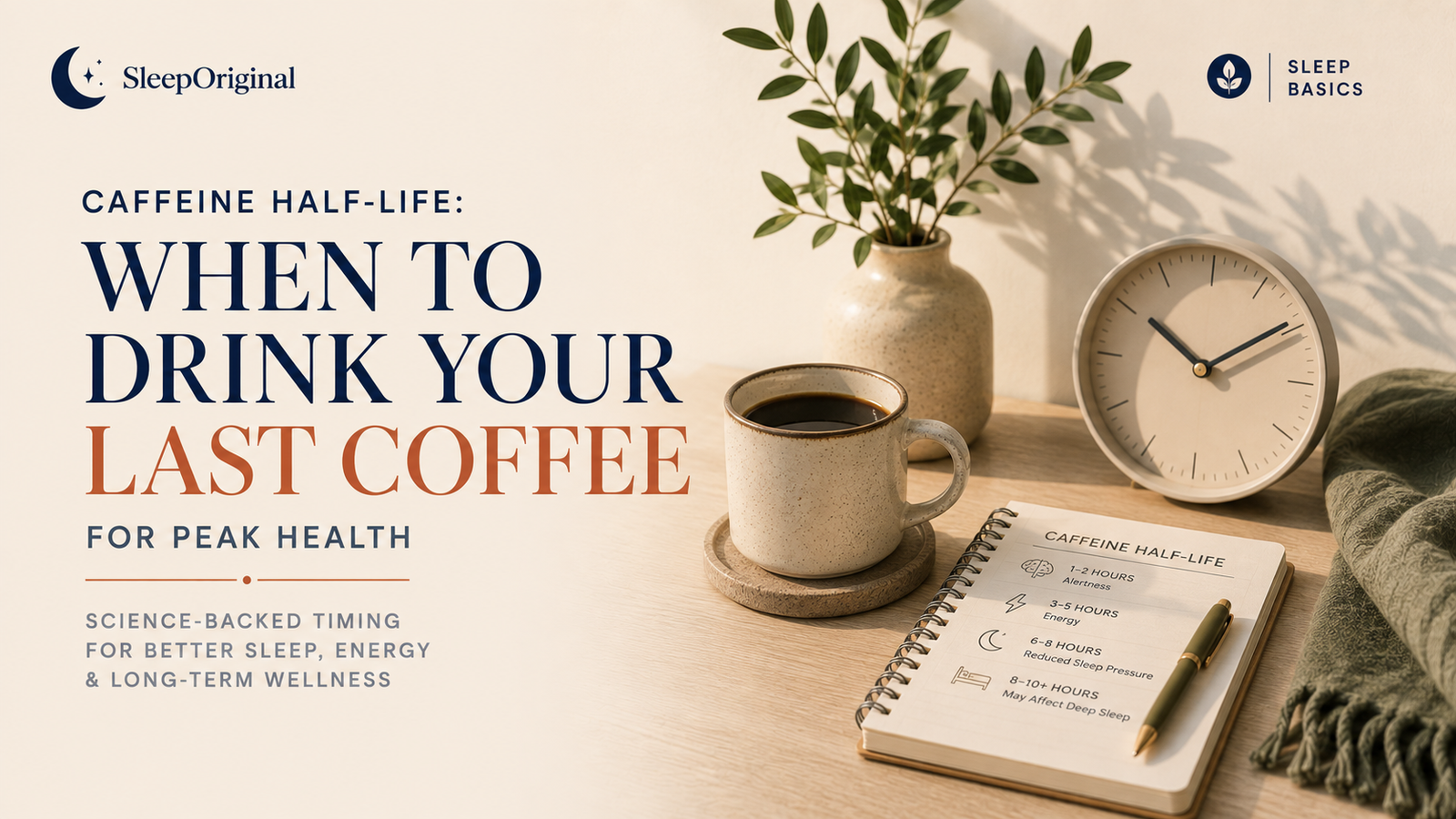
Finally, we cannot ignore what happens during the day. If you consume caffeine late in the afternoon, it is still binding to adenosine receptors in your brain at midnight, keeping your nervous system artificially elevated. Similarly, if you live in a constant state of high stress without any breaks, your baseline cortisol is too high for easy sleep onset.
Ensure your last cup of coffee is at least 10 hours before your target bedtime. And try to incorporate "micro-breaks" during your workday—five minutes where you just stare out a window or take a brief walk. Decompressing slightly throughout the day means you aren't saving a massive backlog of stress to process the moment you hit the pillow.
Summary: Taking Back Your Nights
Racing thoughts are a sign that your brain is trying to protect you by solving problems, but it is doing so at the wrong time. By externalizing your worries with a brain dump, establishing a solid evening landing routine, and using techniques like paradoxical intention or cognitive shuffling, you can gently guide your brain out of its anxious loop.
Remember, the goal is not to force sleep. The goal is to create the physical and psychological conditions where sleep is the most natural next step. Be patient with yourself, stop fighting your own mind, and let the rest come naturally.
Optional calming-tools card
Make a calming routine easier to repeat without adding another complicated task.
-

Hatch Restore 3 — Putty
Best for
Replacing the phone on the nightstand with one device for wind-down, sound and wake-up.
What it does well
- Combines light, sound and alarm so the phone can leave the room
- Routines make the wind-down cue automatic
Trade-offs
- Some content sits behind a subscription
- App-driven setup is more involved than a plain alarm
Check price on Amazon View details for Hatch Restore 3 — Putty -
Yogasleep Dohm Classic White-Noise Machine — White
Best for
Anyone who wants real fan-driven sound rather than a looping recording, and who values a device with no settings to manage.
What it does well
- Mechanical airflow means there is no loop or seam to notice
- Tone collar adjusts the character of the sound, not just volume
Trade-offs
- One sound only — no rain, ocean or brown-noise options
- Mains powered and not pocket sized, so it is a poor travel choice
-
Loop Dream Sleep Earplugs — Black
Best for
Side sleepers, anyone sharing a bed with a snorer, and people who have abandoned foam plugs because of pressure or soreness.
What it does well
- Low-profile body designed specifically for side sleeping
- Oval tips follow the ear canal shape rather than forcing a round fit
Trade-offs
- Fit varies with ear anatomy — no earplug suits every ear, and this is the main variable
- Costs considerably more up front than disposable foam plugs
Only after the brain-dump, breathing, and attention-shifting techniques; one soft text link in the conclusion.
Frequently asked questions
How do I stop racing thoughts at night?
Stop trying to stop them. Externalise the worries onto paper, then give the verbal part of your brain a boring task — cognitive shuffling works — rather than instructing yourself to think about nothing.
Why does my mind race the moment I lie down?
Because the external stimuli that were occupying your attention all day disappear at once. The brain switches to its default mode network, which processes unresolved loops from the day.
Does a brain dump before bed actually work?
Yes. Writing a worry down signals that the information is safely stored elsewhere, so it no longer needs active cognitive bandwidth. Do it on paper — a screen adds alerting light.
What is cognitive shuffling?
Pick a neutral word of five or more letters. Take the first letter and picture as many unrelated objects starting with it as you can, a few seconds each, then move to the next letter. It mimics the disjointed imagery that occurs naturally as you fall asleep.
Should I get out of bed when my thoughts are racing?
After about 20 minutes, yes. The bed is a strongly associative cue, and hours spent worrying in it teach your brain that this is where worrying happens.
Join the conversation
Questions and experiences are welcome. Every comment is read by a person before it appears, and your email address is never published.
No comments yet — yours would be the first.