
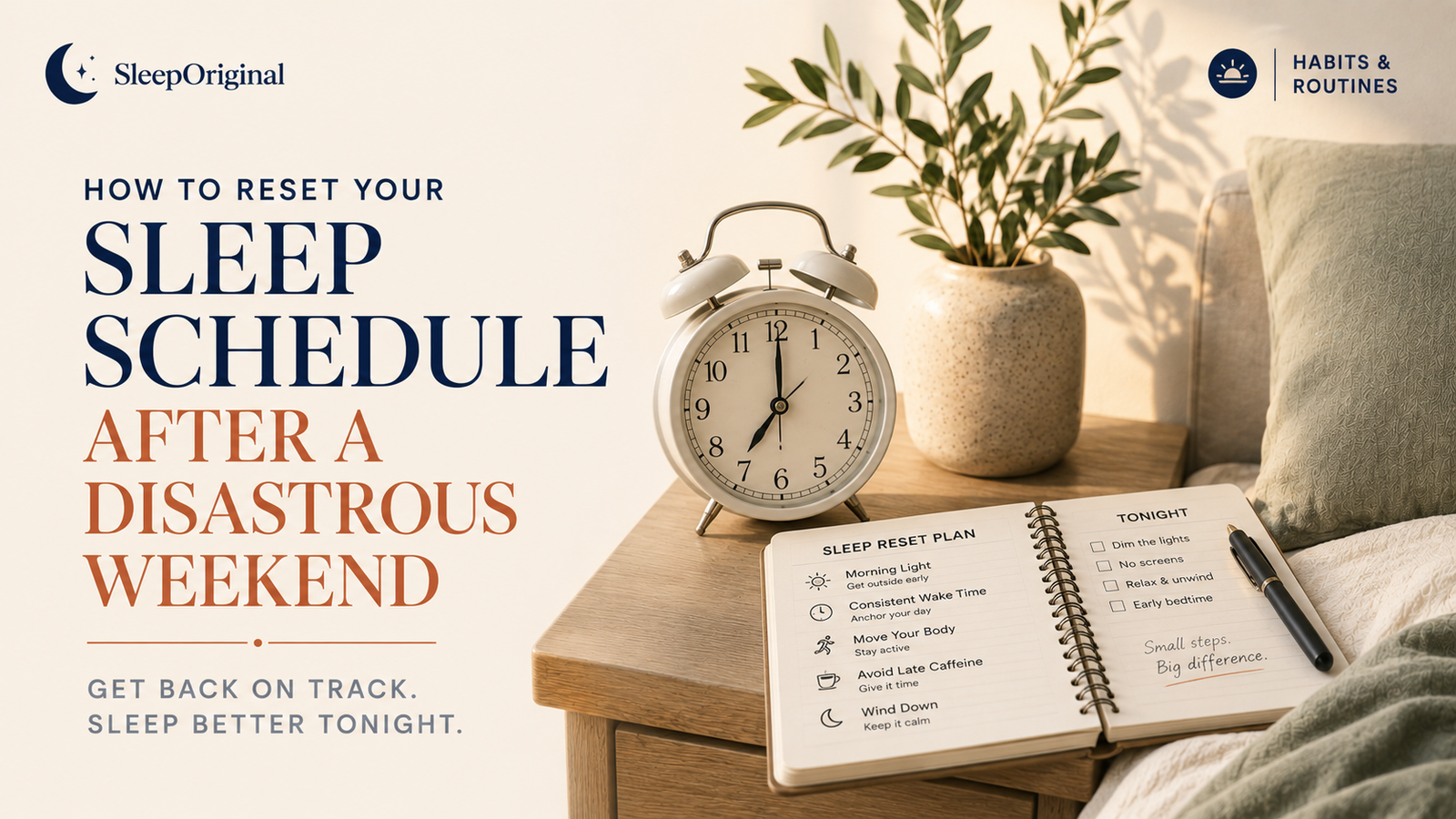
We have all been there. Friday night turns into Saturday morning. Saturday is spent recovering with a massive nap. Saturday night is another late one, and by Sunday evening, you are wide awake at 1 AM, filled with dread about the 6:30 AM alarm that is slowly creeping closer. This is the classic weekend sleep hangover, clinically referred to as 'social jet lag'.
When you shift your sleep schedule by two or three hours over the weekend, you are essentially flying from New York to California and back in 48 hours. Your biological clock is thrown into chaos. When Monday morning hits, your brain thinks it is the middle of the night, but society demands you function at 100% capacity. Trying to muscle your way through the week with caffeine is a losing battle. You need a systemic reset.
The Mistake of the Sunday Night Panic
The most common reaction to a bad weekend is to get into bed at 9 PM on Sunday night, close your eyes tight, and command yourself to sleep. This never works.
Catch The Thought
"If I go to bed three hours early, I can catch up on the sleep I lost!"
Sleep drive does not work like a bank account. You cannot force yourself to sleep if your homeostatic sleep drive (adenosine buildup) and your circadian rhythm are not aligned.
Going to bed before your body is ready simply guarantees you will lie there for hours, growing increasingly anxious. This anxiety spikes cortisol, making sleep even more elusive.
Step 1: The Sunday Morning Anchor (The Hard Part)
If you want to prevent the Sunday night insomnia, the work actually starts on Sunday morning. If you stayed out until 3 AM on Saturday night, do not sleep until noon on Sunday. You must force yourself to wake up no more than ONE hour past your normal weekday wake time.
Yes, this means you will be incredibly tired on Sunday. That is exactly the point. You want to build up a massive sleep debt during the day so that by 10 PM on Sunday night, your body is physically exhausted and begging for sleep.
Wake-time anchor block
Make the new wake time easier to repeat, including on dark mornings.
-
Philips SmartSleep Wake-Up Light HF3520/60
Best for
Dark mornings where a gradual light cue is easier to wake to than an alarm tone.
What it does well
- Gradual sunrise simulation instead of an abrupt alarm
- Simple, self-contained, no app required
Trade-offs
- A backup for daylight, not a replacement for it
- Takes bedside space and a socket
Check price on Amazon View details for Philips SmartSleep Wake-Up Light HF3520/60 -
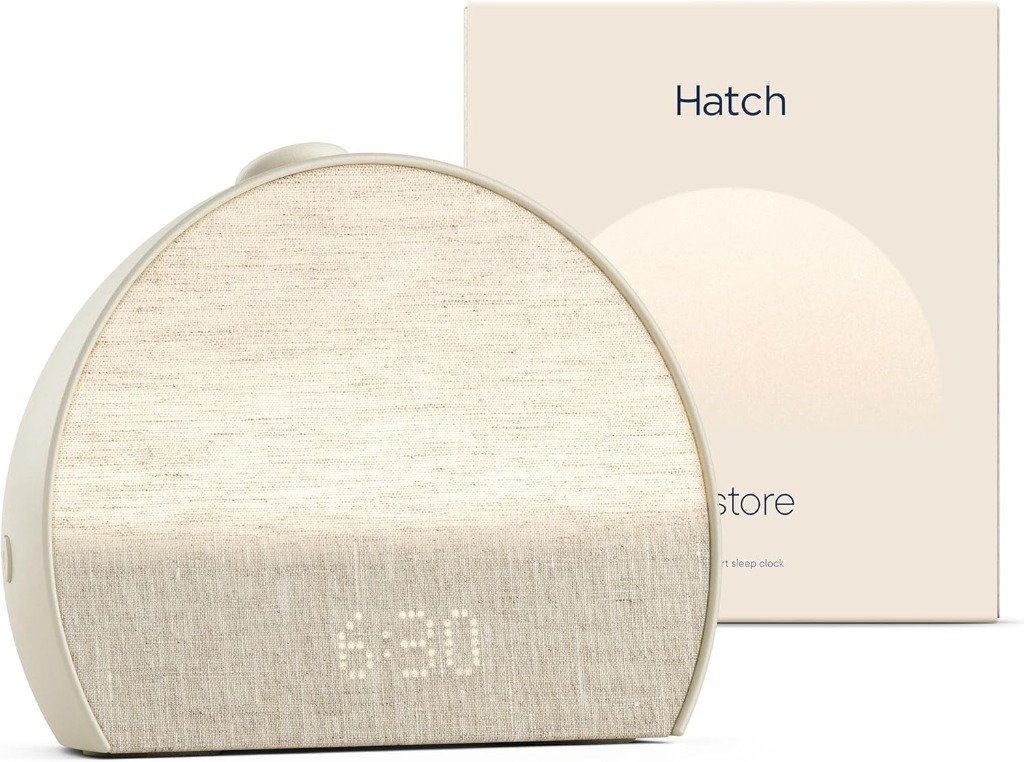
Hatch Restore 3 — Putty
Best for
Replacing the phone on the nightstand with one device for wind-down, sound and wake-up.
What it does well
- Combines light, sound and alarm so the phone can leave the room
- Routines make the wind-down cue automatic
Trade-offs
- Some content sits behind a subscription
- App-driven setup is more involved than a plain alarm
Check price on Amazon View details for Hatch Restore 3 — Putty -
Oura Ring 4
Best for
Readers who want to see what their nights actually look like without wearing a screen or a band to bed, and who will change a habit based on what the data shows rather than only look at it.
What it does well
- Nothing on your wrist and no screen to light up the room, which is the least intrusive way to measure a night
- Reports trends across weeks instead of inviting you to judge yourself on one night
Trade-offs
- The full picture needs a paid Oura membership, billed monthly, on top of the price of the ring
- Ring size is fixed once bought, and you have to order a sizing kit before you can order the ring
Check price on Amazon View details for Oura Ring 4
After the fixed wake-time step; show tracking only after the complete reset plan.
Step 2: The Monday Morning Sun Blast
When that Monday alarm goes off, your brain is going to flood with sleep inertia (that heavy, groggy feeling). Your immediate instinct will be to hit snooze. Do not do it. Snoozing fragments the little sleep you are getting and plunges you back into a new sleep cycle you won't finish.
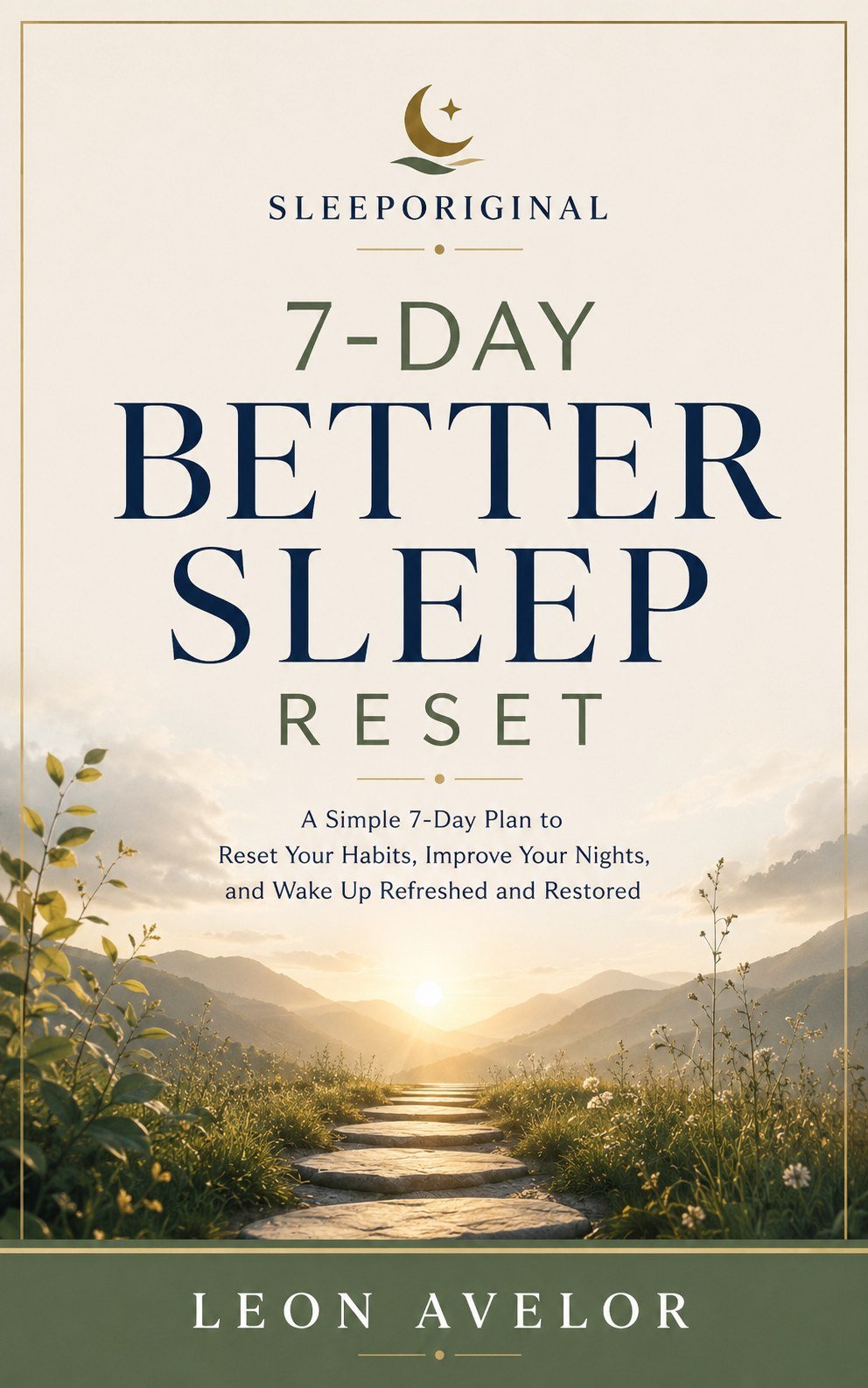
The Better Sleep Reset
A seven-day plan to find out what is actually affecting your sleep. One change per day across timing, daylight, your bedroom and your evenings — then a written plan built from whichever ones worked for you.
Check Price on AmazonAs soon as you stand up, you need to expose your eyes to the brightest light possible. Open the blinds immediately. Better yet, step outside for five minutes. Sunlight hitting the melanopsin receptors in your eyes sends a powerful 'STOP' signal to melatonin production and a 'GO' signal for cortisol. This is the fastest way to shake off the grogginess.
Step 3: Strategic Caffeine (And the Cutoff)
Caffeine is a tool. On a Monday after a disastrous weekend, you are going to need it, but you must use it surgically. Drink your coffee about 90 minutes after waking up. Why? Because when you wake up, your cortisol is naturally spiking to wake you up. If you drink coffee immediately, you blunt this natural process and build tolerance.
More importantly, you must implement a strict caffeine cutoff. No caffeine after 12:00 PM (Noon). Caffeine has a half-life of roughly 5 to 7 hours. If you drink coffee at 3 PM to combat the afternoon slump, 50% of it is still in your brain at 9 PM, making it impossible to fall asleep and perpetuate the cycle into Tuesday.
Caffeine Cutoff Calculator
Caffeine leaves the body gradually rather than all at once. This tool estimates how much of what you drink today may still be active at bedtime, and suggests a window for finishing your last caffeinated drink. It is a planning estimate, not medical advice, and it cannot tell you how you personally respond.
Check Price on AmazonTiny Sleep Experiment
The Melatonin Micro-Dose
- If you really need to shift your clock backward on Sunday night, try a micro-dose of melatonin (0.3mg to 0.5mg).
- Do NOT take the massive 5mg or 10mg pills sold in pharmacies; they will make you groggy on Monday.
- Take the micro-dose about 3 hours before your target bedtime to signal to your brain that dusk is approaching.
Step 4: The 72-Hour Rule
It takes the human body approximately one day to adjust to one hour of time shift. If you shifted your schedule by three hours over the weekend, it will take until Wednesday for your circadian rhythm to fully stabilize.
Important Safety Note
Accept that Monday and Tuesday are going to be slightly sub-optimal. Do not panic about this. Just stick to the consistent wake time, and your biology will inevitably realign by Wednesday.
Stop trying to 'catch up' by napping during the day. If you must nap, keep it strictly under 20 minutes and before 2 PM. Otherwise, you are stealing sleep drive from the upcoming night.
Frequently asked questions
How do I reset my sleep schedule after a bad weekend?
Work forward from the morning. Get up close to your weekday time on Sunday, take the tiredness that produces into Sunday evening, then protect Monday with immediate bright light and a noon caffeine cutoff.
How long does it take to reset a sleep schedule?
About one day per hour of shift. A three-hour weekend drift is usually settled by Wednesday, and expecting Monday to feel normal is what makes people give up.
Should I go to bed early on Sunday night?
No. Sleep drive is not a bank account. Lying down before your body is ready produces hours of frustrated waking, and the anxiety that generates raises cortisol and makes sleep less likely.
Can I nap to catch up?
Only briefly. Keep it under 20 minutes and before 2pm — a longer or later nap steals the sleep pressure you need that night and extends the problem into Tuesday.
What is social jet lag?
The mismatch between your body clock and your schedule caused by shifting sleep times at the weekend. Moving your nights by two or three hours is biologically similar to flying across several time zones and back.

Join the conversation
Questions and experiences are welcome. Every comment is read by a person before it appears, and your email address is never published.
No comments yet — yours would be the first.